What Is Chum Kiu? Wing Chun's Second Form Explained by Sifu Kendra Mahon
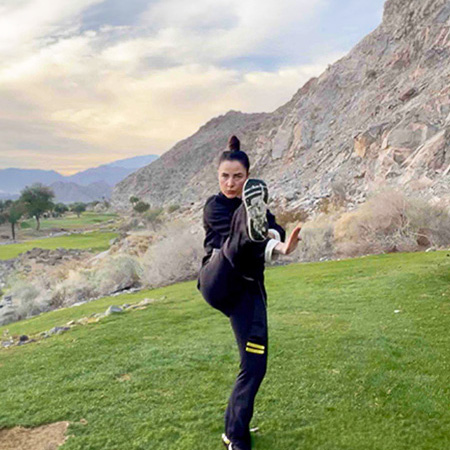
The Form That Made Wing Chun Click for Me
Sil Lim Tao is where Wing Chun begins. But for me, Chum Kiu is where it started to make sense. Not because Sil Lim Tao doesn't make sense — it does, deeply — but because Chum Kiu is where the principles you've been developing suddenly become dynamic. Suddenly you're turning. Suddenly you're moving. Suddenly you're using your whole body as a single weapon rather than training one component at a time. Everything clicks into a different kind of understanding.
Chum Kiu means Seeking the Bridge — and the bridge is the connection between you and your opponent. The form teaches you how to find that connection, how to maintain it, and what to do with it once you have it. It teaches you to turn your entire body into a power source rather than just your arms. And it introduces kicks — the first kicks in Wing Chun's curriculum — in their correct structural context.
What Changes With Chum Kiu
In Sil Lim Tao, you barely move. The feet stay planted. All the training is in the upper body — building structure, developing elbow energy, learning the foundational hand techniques. That stillness is deliberate. You can't learn those things correctly if you're also trying to manage footwork and body rotation at the same time.
Chum Kiu introduces everything you weren't doing in Sil Lim Tao:
- Body turning (pivoting) — Using rotation of the entire body to generate power, deflect attacks, and change the angle of engagement. This is where Wing Chun's signature pivot comes from and why it works.
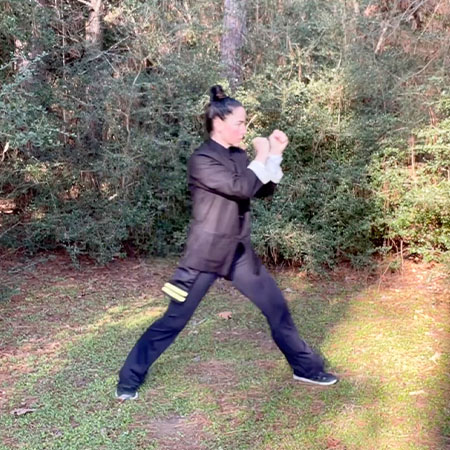
- Stepping — Moving forward, backward, and laterally while maintaining Wing Chun structure. Most fights involve movement. Chum Kiu is where you learn to move without losing your foundation.
- Kicks — Wing Chun's kicks are low, direct, and structurally grounded. Chum Kiu introduces the side kick, the front kick, and the sweeping kick in their correct Wing Chun context.
- Simultaneous hand and foot techniques — One of Wing Chun's most powerful principles. Chum Kiu trains you to attack and defend with both hands and feet simultaneously, multiplying the difficulty for any opponent.
- Bridging — The techniques for making initial contact with an opponent's arms and for recovering contact when it's lost — the core of what Chum Kiu's name refers to.
Why Your Sil Lim Tao Foundation Matters More Than Ever
Here's something I always tell my Chum Kiu students: every weakness in your Sil Lim Tao becomes more obvious in Chum Kiu. If your structure isn't solid, the pivot will expose it. If your elbow energy isn't developed, the bridging techniques won't work. If your stance isn't properly rooted, the kicks will compromise your balance. Chum Kiu doesn't forgive the errors that Sil Lim Tao might have hidden.
This is actually a gift. Chum Kiu acts as a diagnostic tool for your Sil Lim Tao. If things aren't working in Chum Kiu, you almost always need to go back and fix something in Sil Lim Tao. The two forms are in constant dialogue with each other.
My Chum Kiu Master Certification Course
- Complete Chum Kiu form instruction — every technique broken down step by step
- Body turning mechanics — how to generate power from the pivot correctly
- Stepping — how to move in Wing Chun without losing structure
- Wing Chun kicks — their mechanics, their applications, and their structural requirements
- Simultaneous hand and foot combinations
- Bridging techniques and their combat applications
- How Chum Kiu relates to and builds on Sil Lim Tao
- Video examination with feedback from Sifu Kendra Mahon
- Official Chum Kiu Master Certification upon completion
- Listing in the Wing Chun Masters Directory
Ready to move? The Chum Kiu Master Certification is where Wing Chun becomes dynamic.
Frequently Asked Questions
What is Chum Kiu?
Chum Kiu — meaning Seeking the Bridge or Bridging the Gap — is the second of Wing Chun's three empty-hand forms. Where Sil Lim Tao establishes the foundational structure and hand techniques, Chum Kiu introduces body turning (pivoting), stepping, and the use of the entire body as a unified weapon. It is the form that takes Wing Chun from a stationary framework into dynamic combat application.
What does Chum Kiu mean?
Chum Kiu translates to Seeking the Bridge or Bridging the Gap — referring to the act of making contact with an opponent's arms (bridging) and the techniques used to create or recover that contact when it is lost. The bridge is the connection between practitioners in close-range combat, and Chum Kiu teaches both how to establish it and how to exploit it.
What does Chum Kiu add to Sil Lim Tao training?
Chum Kiu adds body turning, stepping, kicks, and the integration of the lower body with upper-body techniques. Where Sil Lim Tao trains the arms and hands from a stationary stance, Chum Kiu teaches the practitioner to generate power from body rotation and footwork, and to combine hand and leg techniques simultaneously.
When should you start Chum Kiu?
Traditionally, Chum Kiu training begins after the practitioner has a solid foundation in Sil Lim Tao — typically when the basic structure, elbow energy, and fundamental hand techniques are well established. Rushing into Chum Kiu without a proper Sil Lim Tao foundation is a common mistake that leads to structural problems.
Can you learn Chum Kiu online?
Yes — Kung Fu Kendra offers a complete Chum Kiu Master Certification program online at KungFuKendra.com with step-by-step video instruction, personalised examination, and official certification.