What Is the Dragon Pole in Wing Chun? Everything You Need to Know About the Luk Dim Boon Gwun
The Weapon That Changed How I Understand Power
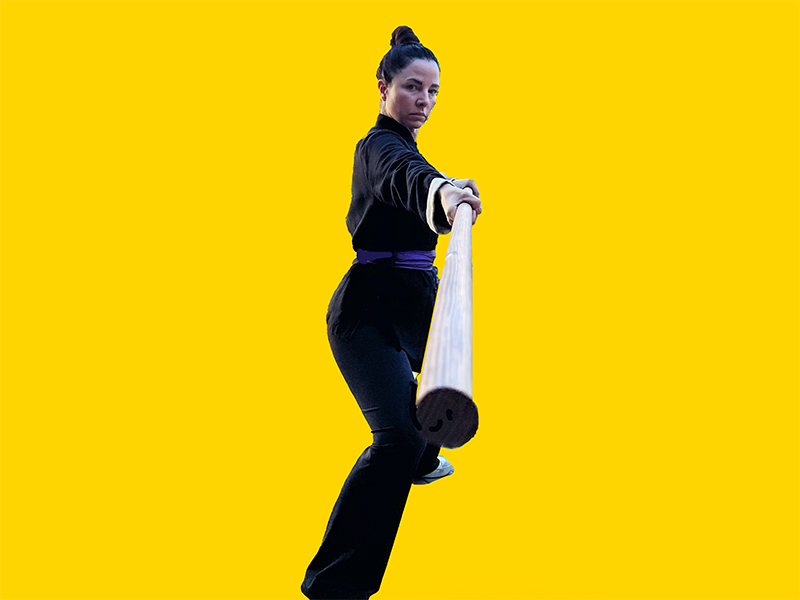
I want to talk about the Dragon Pole — because it's one of the most misunderstood parts of Wing Chun, and honestly one of the most transformative things I've ever trained. When most people think about Wing Chun, they think about fast hands, close-range combat, economy of motion. And they're right. But Wing Chun has two traditional weapon forms, and the Dragon Pole — the Luk Dim Boon Gwun — is the one that takes everything you've built in empty-hand training and pushes it to an entirely new range and level of power.
The name translates to Six-and-a-Half-Point Pole. Six full striking techniques and one half-technique — a retraction. That's it. The elegance of Wing Chun is always in the economy, and the Dragon Pole form is no different. But don't mistake simple for easy. This weapon will expose every weakness in your structure, your rooting, and your understanding of force generation. It's humbling in the best possible way.
The History Behind the Luk Dim Boon Gwun
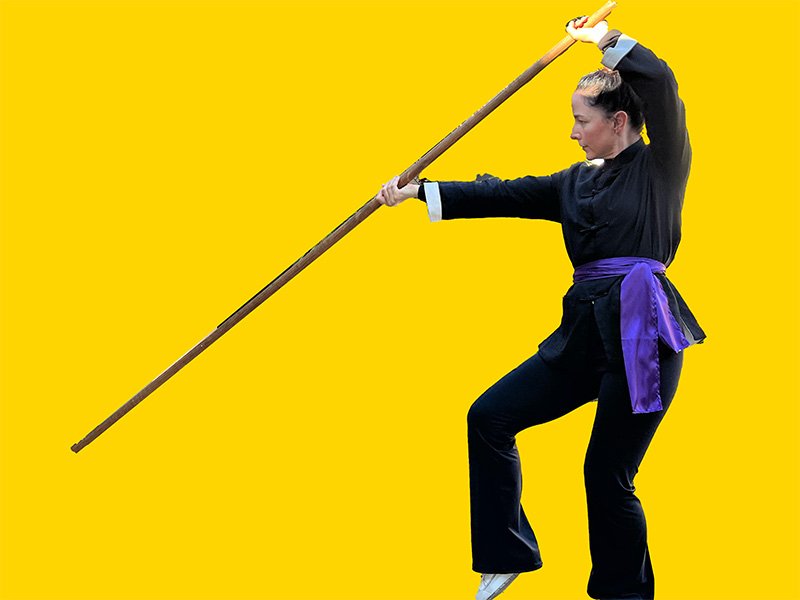
The Dragon Pole has roots that go back centuries in Chinese martial arts. Within the Wing Chun lineage, the pole form is believed to have origins on the Red Boats — the opera troupes that travelled the rivers of southern China and served as a cover for revolutionaries during the Qing Dynasty. The Wing Chun practitioners who lived and trained on those boats adapted long-pole techniques into the system, which is why the pole form feels both distinctly Wing Chun and yet unlike anything in the empty-hand curriculum.
The pole itself is traditionally made of wax wood — a dense, slightly flexible wood that has just enough give to absorb and redirect force without breaking. Length varies by lineage and practitioner, but eight to nine feet is standard. You hold it near the butt end with a wide grip, which means even a small movement at your hands translates to significant movement at the tip. Control is everything. Precision is everything.
What the Dragon Pole Actually Trains
This is what I want people to understand: the Dragon Pole is not just a weapon form you learn at the end of your training journey as a kind of trophy. It actively develops qualities that your empty-hand training cannot — and those qualities come back into your empty-hand work and make it better.
- Whole-body power generation — At eight feet, the pole demands you generate force from your legs through your core and out through your arms. There is no "arm power" at this range. You learn what whole-body integration actually means.
- Forearm and grip strength — Six months of Dragon Pole training will transform your forearms. The grip required to control a long pole with precision builds a different kind of strength than any empty-hand drill.
- Structure under load — Holding an eight-foot pole at the end and thrusting it with precision exposes any structural weakness in your stance and posture. You cannot fake good structure with the Dragon Pole.
- Distance control — Wing Chun is famous for close-range efficiency. The Dragon Pole teaches the same principles at long range — controlling the space between you and your opponent before they can close the distance.
- Sensitivity at range — Just as Chi Sau develops tactile sensitivity at close range, the Dragon Pole develops a different kind of sensitivity — feeling pressure and contact through a long tool and responding with precision.
When Should You Start Learning the Dragon Pole?
In traditional Wing Chun, weapons training comes after the three empty-hand forms — Sil Lim Tao, Chum Kiu, and Biu Jee — and after the Butterfly Swords form. The reason is simple: the weapon forms apply and extend the principles you've developed in empty-hand training. If those principles aren't in place, the weapon form becomes an exercise in memorising choreography rather than learning a martial skill.
That said, I've designed my Dragon Pole Master Certification course to be accessible to practitioners who have a solid Wing Chun foundation — even if they haven't completed the full traditional curriculum in sequence. If you understand your structure, you have genuine rooting, and you understand Wing Chun's core principles of economy and directness, you're ready to begin exploring the Dragon Pole. The course will meet you where you are and build from there.

What My Dragon Pole Certification Course Covers
I built this course the way I wish I'd had it available when I was learning — broken down into clear, logical steps with every technique explained not just as movement but as principle. Here's what's included:
- The complete Luk Dim Boon Gwun form, broken down movement by movement
- The principles behind each of the six-and-a-half techniques and why they work
- Power generation training — how to develop and apply whole-body force through the pole
- Centerline theory applied to long-range weapon engagement
- Structural training drills to build the strength and rooting the form requires
- Video examination — you submit your form for professional assessment and feedback
- Official Dragon Pole Master Certification upon successful completion
- Listing in the Wing Chun Masters Directory as a certified Luk Dim Boon Gwun practitioner
The Dragon Pole is one of the most rewarding things I teach. Students who complete this course consistently tell me it changed how they feel in their empty-hand work — that understanding power at range made them understand force generation at close range in a way they hadn't before. That's the beauty of Wing Chun as a complete system. Every piece informs every other piece.
If you're ready to add this to your training, the Dragon Pole Master Certification course is available now at a limited-time price. I'll see you on the other side.
Frequently Asked Questions
What is the Dragon Pole in Wing Chun?
The Dragon Pole, known as the Luk Dim Boon Gwun (六點半棍) or Six-and-a-Half-Point Pole, is Wing Chun's long-range weapon — an 8-9 foot pole used to develop extended-range force generation, structural power, and distance control. It is one of Wing Chun's two traditional weapon forms.
When do you learn the Dragon Pole in Wing Chun?
Traditionally after the three empty-hand forms and the Butterfly Swords form. In Kung Fu Kendra's curriculum, practitioners with a solid Wing Chun foundation can begin the Dragon Pole Certification course regardless of where they are in the traditional sequence.
What does Luk Dim Boon Gwun mean?
Luk Dim Boon Gwun translates to Six-and-a-Half-Point Pole — referring to the six full striking techniques and one half-technique (a retraction) that make up the form. Each of the six points represents a distinct combat application: thrusting, deflecting, sweeping, circling, lifting, and pressing.
Can you learn the Dragon Pole online?
Yes — Kung Fu Kendra offers a complete Dragon Pole Master Certification course online. The course includes step-by-step instruction, a video examination, personalised feedback, and an official Master Certification upon completion. Available at KungFuKendra.com.
Why is the Dragon Pole important for Wing Chun training?
The Dragon Pole develops power, structure, and range that empty-hand training cannot replicate. Training with the pole builds whole-body force generation, forearm strength, structural integrity under load, and deepens understanding of Wing Chun's core principles at a new range of engagement. Many practitioners find it improves their empty-hand work significantly.