Ip Man (2008): The Film That Brought Wing Chun to the World
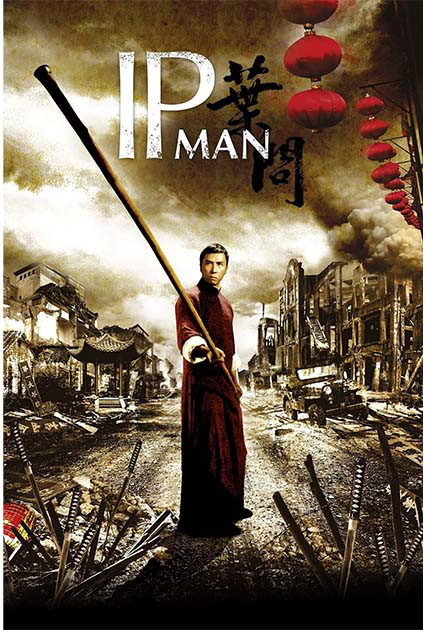
The original Ip Man film remains one of the finest martial arts movies ever made, and for Wing Chun practitioners it is something more — a rare case of cinema actually capturing the essence of the art. Donnie Yen's portrayal of Ip Man brings the core principles of Wing Chun to life with striking accuracy. The fight choreography is built around Wing Chun's actual philosophy: efficiency over power, close-range control, and the centerline as the axis of every engagement.
The film is full of Wing Chun moments worth studying: chain punches used not as a trick but as a logical continuation of forward pressure, trapping hands that neutralize grabs and redirects, and footwork that maintains position on the centerline rather than circling for angles. The famous sequence where Ip Man faces ten opponents is cinematically exaggerated but conceptually grounded — Wing Chun was designed precisely for the reality of multiple attackers, where efficiency and structure matter more than athleticism.
The film also earns respect for how it handles the philosophical side of Wing Chun. Ip Man's humility, his reluctance to fight unless necessary, and his belief that martial arts are for self-development rather than dominance — these are not Hollywood inventions. They reflect values that Wing Chun practitioners recognize as central to the tradition. For anyone curious about Wing Chun, this film is the best possible introduction.
Ip Man 2 (2010): Chi Sao, Western Boxing, and Wing Chun's Adaptability
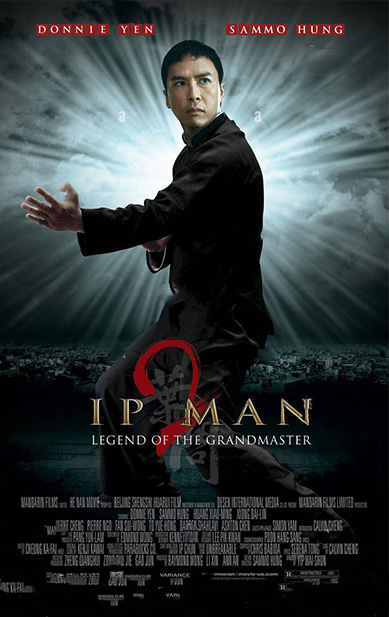
Ip Man 2 does something the first film doesn't — it puts Wing Chun directly against a completely different fighting system in Western boxing, and uses that contrast to illuminate what makes Wing Chun work. The film's standout contribution for practitioners is its depiction of Chi Sao, or sticky hands. The scenes where Ip Man engages with other kung fu masters through contact sensitivity are beautifully rendered and capture something that almost never appears on screen: what it actually feels like to train this way.
The climactic fight against the British boxer is where the film leans most heavily into cinematic license, but the principles underneath are real. Wing Chun's answer to a larger, stronger, longer-reaching opponent is not to match power with power — it is to close distance, control the centerline, and use structural efficiency to neutralize the reach advantage. That is exactly what Ip Man does, even if the execution is amplified for the screen.
These films have introduced Ip Man and Wing Chun to a global audience of students now able to learn Wing Chun online — something unimaginable in Ip Man's own time. Ip Man 2 is a worthy sequel that deepens the Wing Chun conversation rather than simply repeating the first film's formula.
Ip Man 3 (2015): Wing Chun's Evolution and Its Influence on Bruce Lee
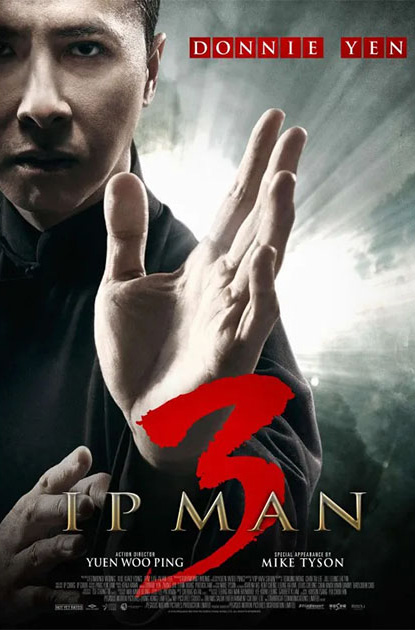
Ip Man 3 is the most philosophically ambitious entry in the series. While the previous films focused on Wing Chun as a physical system, this one asks a deeper question: what does it mean to truly master an art? The film's exploration of this through Ip Man's later years — and his encounters with a young Bruce Lee — gives it a dimension the earlier entries don't have.
The fight scenes against Mike Tyson's character are the most technically challenging the choreographers faced — how do you make Wing Chun's close-range efficiency convincing against a world-class boxer's raw power? The answer the film arrives at is correct: positioning, angle, and structure. You don't trade punches with Mike Tyson. You don't let him punch you at all. Ip Man's strategy is to stay inside the arc of power, where Wing Chun operates best.
The concept of "formless form" introduced here — the idea that true mastery transcends rigid technique — is central to Wing Chun's higher levels and is rarely articulated this clearly on screen. The film serves as both entertainment and a thoughtful look at Wing Chun's enduring principles.
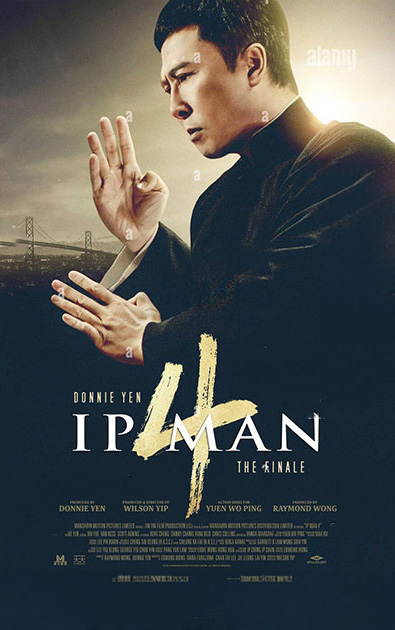
Ip Man 4: The Finale (2019): Wing Chun Goes Global
The final entry in the series follows Ip Man to the United States, exploring how Wing Chun's principles translate across cultural and stylistic boundaries. It is a fitting thematic conclusion — Wing Chun is today practiced worldwide, and this film dramatizes the moment that spread began, through Ip Man's most famous student, Bruce Lee.
The fight scenes continue to impress. Donnie Yen's portrayal of Ip Man at this stage of the character's life emphasizes the subtlety and economy of advanced Wing Chun — less athletic spectacle, more precise control. The encounters with American martial artists highlight Wing Chun's core adaptability: the principles don't change depending on the opponent's style. Centerline, structure, and efficiency work against every system.
Ip Man 4 closes the series with a clear message: Wing Chun belongs to everyone. The art that Ip Man preserved and taught is now accessible to practitioners around the world through the Wing Chun Online Certification Course — continuing the tradition of passing this art forward that defined Ip Man's life. As a finale, it earns its title.
Frequently Asked Questions
Is the Ip Man movie accurate to real Wing Chun?
The films are among the most authentic portrayals of Wing Chun in cinema. While they take dramatic liberties with historical events, the core techniques — chain punches, centerline theory, trapping hands, and Chi Sao — are represented with genuine accuracy. Donnie Yen trained for 9 months directly with Ip Chun to prepare.
What order should I watch the Ip Man movies?
Watch them in release order: Ip Man (2008), Ip Man 2 (2010), Ip Man 3 (2015), and Ip Man 4: The Finale (2019). The films follow a loose chronological arc from Ip Man's early life through to his later years.
Which Ip Man movie is the best?
Ip Man (2008) is widely considered the strongest entry — praised for its balance of historical grounding, emotional depth, and authentic Wing Chun choreography. Ip Man 2 is also highly regarded for its Chi Sao depiction and Wing Chun versus Western boxing matchup.
Did the Ip Man movies inspire people to learn Wing Chun?
Yes — significantly. The series is widely credited with driving a global surge of interest in Wing Chun, making it one of the most searched martial arts worldwide after each film's release. Many students who now train Wing Chun online first discovered the art through these films.