Wing Chun Butterfly Swords: What They Are and Why Sifu Kendra Mahon Teaches Them
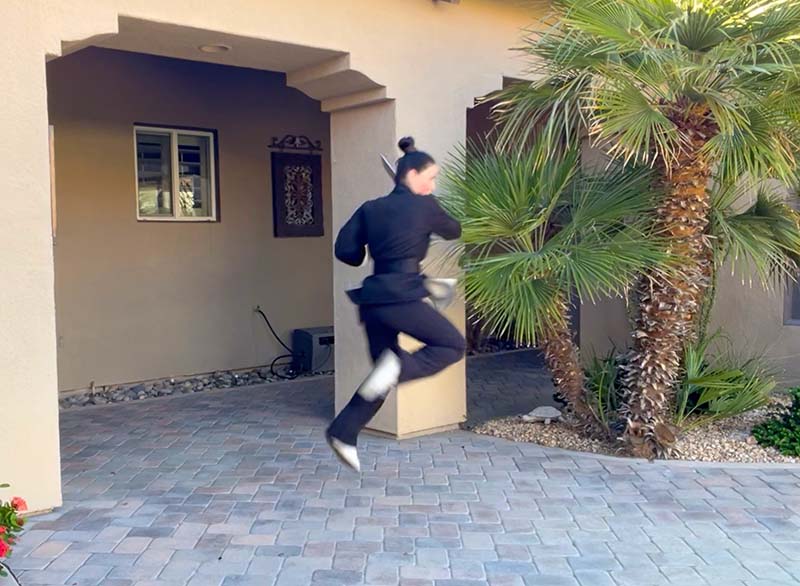
The First Time I Picked Up the Butterfly Swords
I remember the first time I trained with the Butterfly Swords. I'd been doing Wing Chun for years by that point — I had the three forms, I had Chi Sau, I thought I understood what Wing Chun was. Then I picked up those swords and realised how much I still had to learn. Not because the weapon made everything harder — though it did — but because it revealed things about my structure and my technique that I hadn't been able to see before. Holding a blade has a way of making correctness feel urgent.
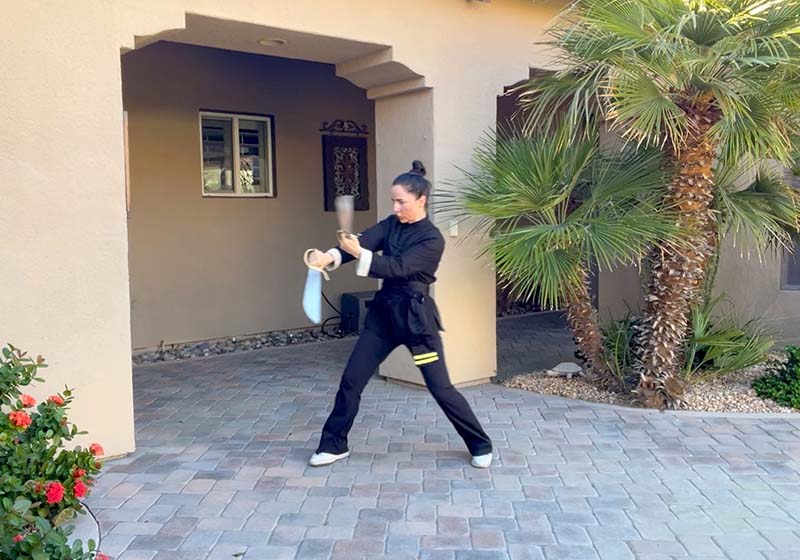
The Butterfly Swords — the Bart Cham Dao — are unlike any other weapon in Chinese martial arts. They're short, about the length of your forearm and hand together, designed for close quarters. They're held with a D-guard grip that allows the guard to be used as a blocking surface, the blade for cutting, and the spine for controlling or striking. In many ways they're an extension of Wing Chun's empty-hand principles — same range, same structure, same economy — but with the addition of a cutting edge that transforms every movement.
What the Butterfly Swords Actually Develop
People sometimes think weapon training is separate from the core of Wing Chun — an advanced add-on for practitioners who want to do something exotic. That's not how I see it, and it's not how the traditional curriculum treats it. The Butterfly Sword form develops specific qualities that empty-hand training cannot:
- Wrist strength and control — Manipulating two short swords simultaneously develops extraordinary wrist strength and fine motor control that carries directly back into your empty-hand techniques
- Cutting mechanics and angle — Understanding how a blade cuts teaches you things about angle and edge that transform how you think about empty-hand striking
- Guard usage — The D-guard teaches close-range weapon control and how to simultaneously attack and defend with the same tool — a very Wing Chun concept
- Two-weapon coordination — Training both hands simultaneously on independent tasks develops coordination and ambidexterity that benefits all subsequent training
- Power in close quarters — The short blade demands that you generate effective force at very short range — which is where Wing Chun operates anyway
The Eight Cuttings — What the Bart Cham Dao Teaches
The name Bart Cham Dao means Eight Cutting Swords — eight fundamental cutting directions that together create a comprehensive close-range weapon vocabulary. Each cutting direction has a specific purpose and application, and together they cover every angle of engagement at close quarters. Training the eight cuttings builds the muscle memory and structural understanding to apply controlled cutting force at any angle, with precision, from a grounded Wing Chun structure.
What I love about teaching this form is watching students realise that the eight cuttings aren't separate techniques — they flow into each other the way Wing Chun hand techniques do. The transitions between cuttings are themselves techniques. The form is a continuous expression of the same Wing Chun principles they've already developed, applied through a new tool at a familiar range.
My Butterfly Sword Master Certification Course
- Complete Bart Cham Dao form instruction — broken down technique by technique
- The principle and martial application behind each of the eight cuttings
- Guard usage and close-range weapon control
- Two-weapon coordination drills
- Structural training for weapon technique
- Video examination with feedback from Sifu Kendra Mahon
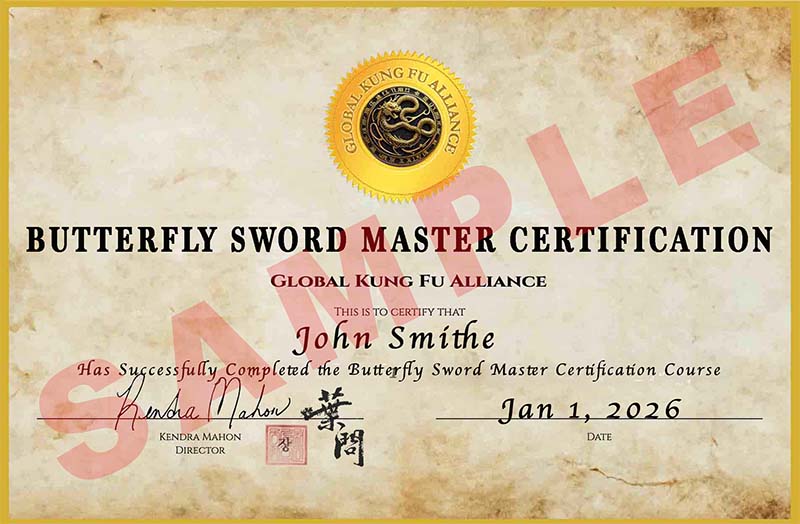
- Official Butterfly Sword Master Certification upon completion
- Listing in the Wing Chun Masters Directory
The Butterfly Swords changed how I understand Wing Chun. They'll do the same for you. The Butterfly Sword Master Certification is available now.

Frequently Asked Questions
What are the Wing Chun Butterfly Swords?
The Wing Chun Butterfly Swords — known as the Bart Cham Dao (八斬刀), meaning Eight Cutting Swords — are two short single-edged swords used together in Wing Chun's primary weapon form. They are typically 15-18 inches in blade length and are designed for close-range combat, extending the reach and cutting power of Wing Chun's empty-hand techniques.
When do you learn the Butterfly Swords in Wing Chun?
Traditionally, the Butterfly Swords are taught at around level 7 of the Wing Chun curriculum — after the three empty-hand forms are well established. The weapon form requires a solid foundation in Wing Chun structure and hand technique before it can be trained meaningfully.
What does Bart Cham Dao mean?
Bart Cham Dao translates to Eight Cutting Swords — referring to eight fundamental cutting directions or techniques in the form. The name describes the comprehensive cutting vocabulary that the form develops.
Can you learn Wing Chun Butterfly Swords online?
Yes — Kung Fu Kendra offers a complete Butterfly Sword Master Certification course online at KungFuKendra.com, including video instruction, examination, and official certification.
Are Wing Chun Butterfly Swords practical for self-defense?
The Butterfly Sword form develops qualities that transfer directly to empty-hand self-defense — wrist strength, cutting mechanics, close-range weapon control, and the structural principles of Wing Chun applied to an armed context. The training itself is valuable regardless of whether a practitioner ever uses the physical weapons.