Wing Chun Stances: The Foundation Every Beginner Needs
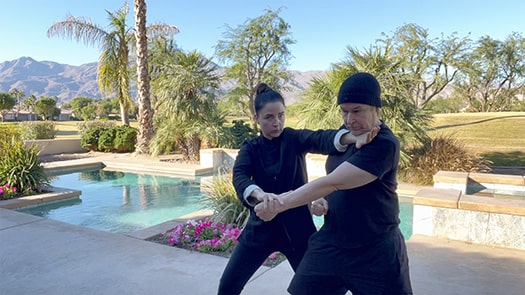
Why Stance Is Everything in Wing Chun
In Wing Chun, stance is not just a starting position — it is the structural foundation from which every technique draws its power. A Wing Chun punch that looks correct but comes from a compromised stance has no structural backing. A deflection that appears technically perfect but is disconnected from the lower body will collapse under pressure. Understanding Wing Chun stances is understanding where Wing Chun's power actually comes from.
The Three Wing Chun Stances
1. Yee Ji Kim Yeung Ma — The Training Stance
Yee Ji Kim Yeung Ma is Wing Chun's foundational training position and the stance of Siu Nim Tao. The feet are shoulder-width apart, toes pointing outward at roughly 45 degrees, knees bent inward toward each other, weight equally distributed. The spine is upright, the tailbone tucked slightly, and the shoulders relaxed.
This stance is a training tool, not a fighting stance. Standing in Yee Ji Kim Yeung Ma for extended periods develops the structural connection between the lower body and upper body that Wing Chun techniques require. It teaches the practitioner what it feels like to be rooted while remaining relaxed.
The most common beginner error is making the stance too wide, which reduces mobility, or too narrow, which reduces stability. The correct width is approximately the distance between your shoulders.
2. Biu Ma — The Stepping Stance
Biu Ma is the transitional stance used during stepping and footwork. When Wing Chun practitioners move — forward, backward, or laterally — they pass through Biu Ma as the weight shifts from one foot to the other. A well-developed Biu Ma keeps the centreline protected and the structure connected throughout movement, preventing the vulnerability that often appears when people step.
3. The Fighting Stance
Wing Chun's fighting stance differs from Yee Ji Kim Yeung Ma in several important ways. One foot steps slightly forward, weight distributes approximately 60-40 between rear and front foot, and the body turns slightly to present a narrower profile. The hands come up to cover the centreline. This stance prioritizes mobility and readiness over the deep structural training of Yee Ji Kim Yeung Ma.
Why Wing Chun Stances Look Different
Wing Chun stances are narrower and more upright than most other martial arts. Karate and Taekwondo practitioners often train in wide, deep stances. Wing Chun's narrower stance allows faster footwork and mobility, protects the centreline, and keeps weight in a position where movement is always available. A deep wide stance is stable but slow. Wing Chun prioritizes mobility over static stability.
Building Your Stance
- Start with Yee Ji Kim Yeung Ma: Hold it for 2-3 minutes at a time, focusing on relaxation not rigidity
- Check your knees: They should track over your toes, not collapse inward past them
- Relax your shoulders: Tension in the shoulders disconnects your upper and lower body
- Keep your spine upright: Do not lean forward — your weight should feel centered
- Practice transitions: Move between Yee Ji Kim Yeung Ma and the fighting stance until the transition feels natural
Frequently Asked Questions
What is the basic Wing Chun stance?
The basic Wing Chun stance is Yee Ji Kim Yeung Ma — feet shoulder-width apart, toes pointing outward at 45 degrees, knees bent inward, weight equally distributed. This training stance develops the structural connection between lower and upper body that Wing Chun techniques require.
How many stances are in Wing Chun?
Wing Chun has three primary stances: Yee Ji Kim Yeung Ma (the training stance), Biu Ma (the stepping stance used during footwork), and the fighting stance. Each serves a specific purpose in the system.
Why do Wing Chun stances look different from other martial arts?
Wing Chun stances are narrower and more upright than most martial arts. This allows faster footwork and mobility, protects the centreline, and keeps the practitioner in a position where movement is always available.
How long does it take to develop a good Wing Chun stance?
The basic shape can be learned in a single session. Developing genuine structural quality — where the stance feels stable and connected rather than just correct in shape — typically takes several months of consistent training.
Ready to build your Wing Chun foundation properly? The Wing Chun Online Certification Course covers stances, footwork, and all foundational techniques from Level 1.