Best Wing Chun Wooden Dummy: Complete Buyer's Guide
What Is a Wing Chun Wooden Dummy?
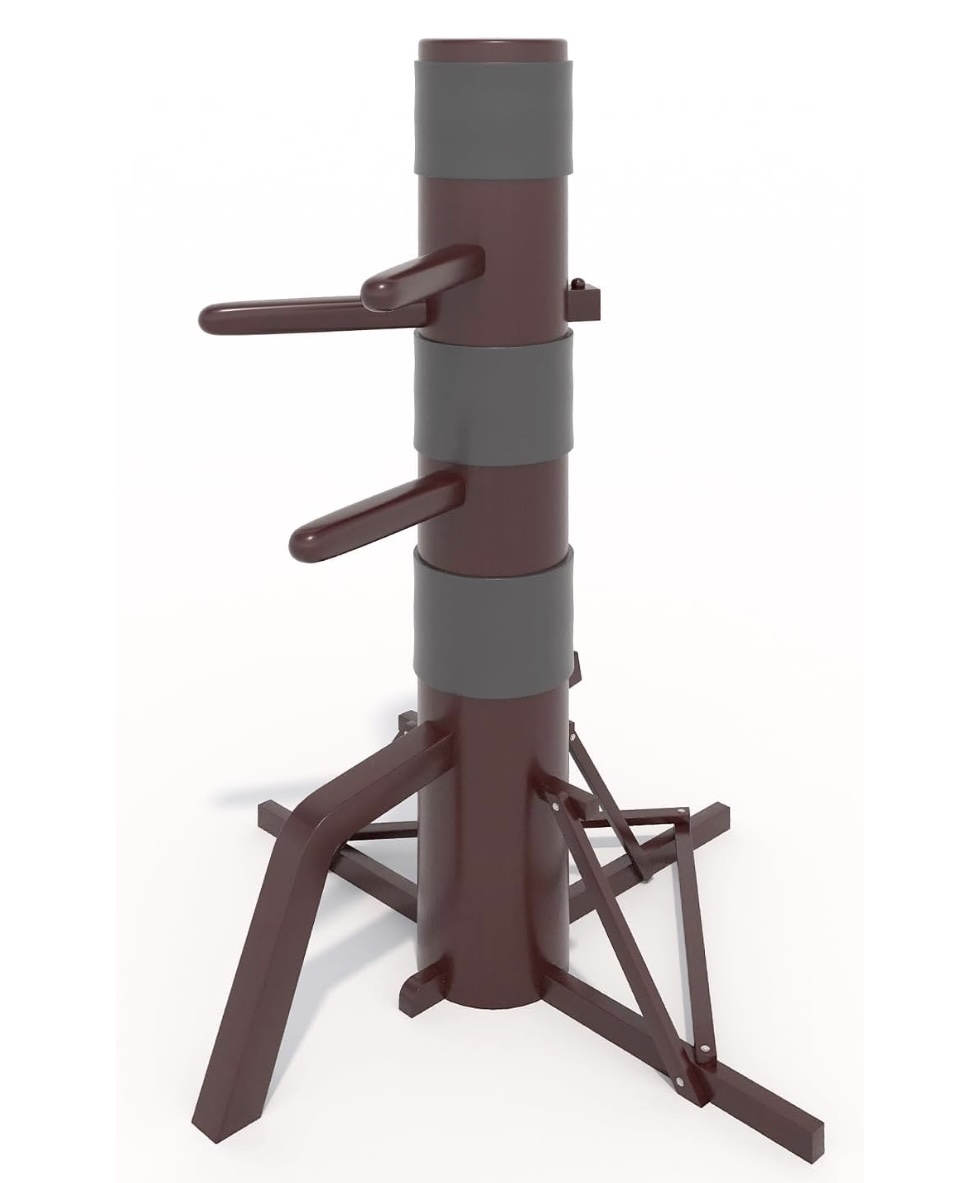
The Wing Chun wooden dummy — called the Mook Yan Jong (木人樁) in Cantonese — is one of the most iconic training tools in martial arts. It consists of a vertical wooden post with three arm projections (two upper, one lower) and one angled leg projection, designed to approximate the structure and positions of an opponent. The wooden dummy allows Wing Chun practitioners to train technique, precision, power, and angles completely solo — no partner required.
The Mook Yan Jong bridges the gap between form practice and partner drills — giving your techniques something real to work against while building hand conditioning, structural integrity, and precision. If you're serious about Wing Chun solo training, a wooden dummy is one of the best investments you can make.
Types of Wing Chun Wooden Dummies
Traditional Hanging Dummy
The original design suspends the dummy from two horizontal beams using a spring mechanism, allowing it to flex and bounce back when struck. This give provides realistic feedback and is the preferred design for serious practitioners. However, hanging dummies require solid ceiling beams for mounting — which makes them impractical for most apartment dwellers or home practitioners without a dedicated training space.
Wall-Mounted Dummy
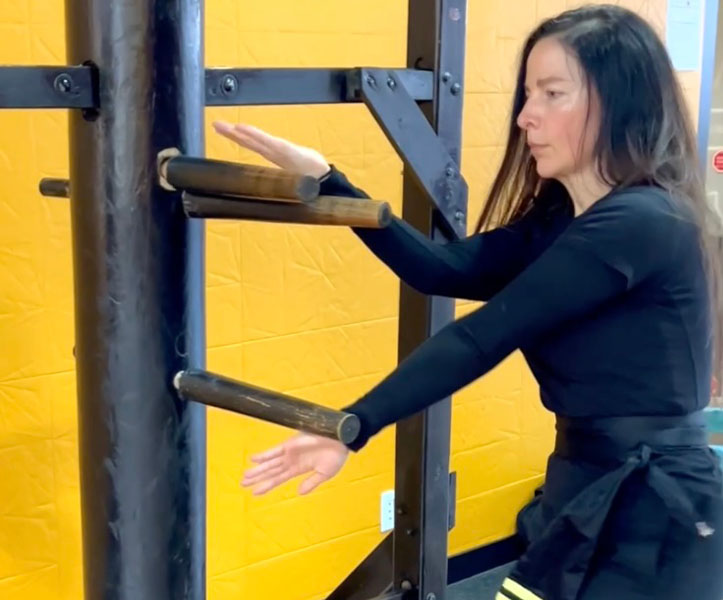
Wall-mounted wooden dummies attach to a frame bolted directly into a wall. They are more compact than hanging dummies and easier to install in a home environment. A good wall-mounted dummy includes a spring mechanism that gives the dummy realistic flex and response. This is the most popular option for home practitioners.
Free-Standing / Base-Mounted Dummy
Free-standing dummies sit on a weighted base and require no wall or ceiling mounting at all — ideal for apartments, condos, or any space where you can't drill into walls. Quality has improved significantly: modern free-standing dummies with spring or shock-absorbing bases provide a realistic training experience and are also portable.
What to Look for When Buying
Material and Wood Type
Traditional dummies are made from hardwoods — teak, ironwood, and rattan are historically preferred for their density and durability. Modern dummies are also made from pine, composite wood, and PVC. For serious training, hardwood dummies are significantly better — more durable, more authentic, and able to withstand heavy use.
Spring Mechanism and Response
The spring or flex mechanism determines how the dummy responds when you hit it. A good dummy should flex realistically — bouncing back slightly when struck, as an opponent would — rather than being completely rigid. Always check the spring mechanism quality before purchasing.
Arm and Leg Positioning
The arms and leg of the dummy must be at the correct angles for Wing Chun training. The upper arms should sit at approximately shoulder height, the middle arm slightly lower, and the leg should project at approximately knee level. Cheaper dummies sometimes have arms at incorrect heights or angles.
Wing Chun Wooden Dummy Price Guide
- Under $200: Entry-level pine or composite dummies — acceptable for beginners, limited durability
- $200–$400: Mid-range free-standing or wall-mounted dummies with basic spring mechanism
- $400–$800: Good quality hardwood or composite with solid spring response — the sweet spot for home practitioners
- $800–$1,500: High-quality hardwood with excellent construction and response
- $1,500+: Traditional teak or ironwood dummies, hand-crafted to traditional specifications
Do You Need a Wooden Dummy to Learn Wing Chun?
No — and this is worth saying clearly for beginners. A wooden dummy is best introduced after you have a solid foundation in the empty-hand forms and basic techniques. Beginners who jump to dummy training before their structure and technique are established tend to develop bad habits. Start with a great structured program — like our Wing Chun online training and certification course — build your foundation, then add the Mook Yan Jong when the curriculum introduces it.
Frequently Asked Questions
What is a Wing Chun wooden dummy?
A Wing Chun wooden dummy — called Mook Yan Jong — is a solo training tool consisting of a vertical wooden post with three arm projections and one leg projection, designed to replicate the structure of an opponent.
What type of wooden dummy is best for Wing Chun?
The best option for most home practitioners is a wall-mounted or free-standing design with a spring mechanism. Traditional hanging dummies require ceiling beam mounting, which isn't practical for most homes.
How much does a Wing Chun wooden dummy cost?
Dummies range from around $200 to $2,000+. The sweet spot for serious home practitioners is the $400–$800 range, which provides quality construction with a solid spring mechanism.
Do I need a wooden dummy to learn Wing Chun?
No — especially for beginners. The three empty-hand forms and foundational drills develop all the core skills without any equipment. A wooden dummy is best introduced after a solid foundation in the forms.
Build your foundation first with the free Siu Nim Tao eBook and our Wing Chun online training and certification program — then add the Mook Yan Jong when the time is right.
Start the Wing Chun Online Certification Course
The complete Wing Chun system taught by a 3rd Generation Ip Man lineage master. No partner needed, no local school required. Beginner to certified Sifu — fully online.
View the Course →